

Unlocking Lasting Change: When Nudging Meets Hooking
Unlocking Lasting Change: When Nudging Meets Hooking
The Tale of Two Attempts
I’d tried to meditate more times than I can count.
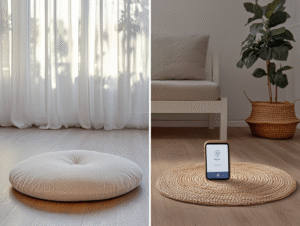 First attempt? I went all in. Downloaded a sleek meditation app, set ambitious daily goals, even bought myself a ridiculously fancy cushion (because surely that would make me consistent). The app had it all — gorgeous interface, streak counters, progress badges, little dopamine hits that kept me coming back… for exactly 12 days.
 Second attempt? I decided to ditch the tech and hack my environment instead. I placed the cushion right next to my bed, set out a cup of herbal tea before sleeping, and programmed my smart lights to glow soft and golden at 6 AM. Meditation felt so effortless to start… for exactly 11 days.
Here’s what I didn’t realize back then: my first attempt was powered by the Hooked Model (habit-forming product psychology). My second was built on Nudge Theory (environmental design for better choices). Both are powerful. Both work. But used alone? They’re incomplete.
The real magic happened when I accidentally combined them.
That’s when I went from two failed sprints… to meditating 200+ days in a row.
And once I saw how those two frameworks worked together, I stopped seeing them as “just for meditation.” I started using them for everything — from health habits to business growth — and the results have been game-changing.
The Science Behind Lasting Transformation
We’ve all been there. The burning desire for change – to eat healthier, exercise more, be more mindful, learn a new skill. Yet, despite our best intentions and sheer willpower, these resolutions often fizzle out. What if there was a smarter way to create lasting transformation?
The answer lies in understanding why single approaches fail and how combining two fascinating frameworks—Nudge Theory and the Hooked Model—creates an unstoppable force for change.
Why Nudges Alone Fall Short
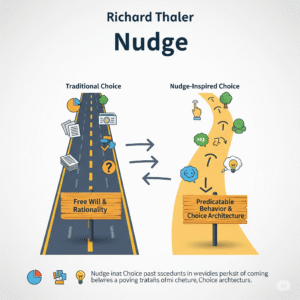 Developed by Nobel laureate Richard Thaler and Cass Sunstein, Nudge Theory suggests that we can influence behaviour through subtle environmental changes without restricting choice. Think of it as designing your world to make desired actions easier and more attractive.
The Problem: While nudges excel at initiating behaviour, they struggle with maintenance. You might successfully nudge yourself to pick up that book by placing it on your pillow, but nudges alone can’t create the psychological momentum needed for lasting habits.
Real Example: Grocery stores use nudges brilliantly—placing healthy snacks at eye level, creating easy-to-grab fruit displays near checkout. These nudges influence purchase decisions, but they don’t create loyal customers who crave those healthy snacks.
Why Hooks Alone Aren’t Enough
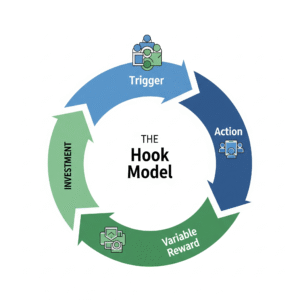 Nir Eyal’s Hooked Model explains how products create user habits through four stages:
Trigger → Action → Variable Reward → Investment.
This framework powers everything from social media addiction to fitness app engagement.
The Problem: Without proper environmental design, even the most psychologically compelling hooks can be derailed by friction. Instagram’s hook is incredibly powerful, but if you had to solve a complex puzzle every time you wanted to open the app, usage would plummet.
Real Example: Duolingo masters the hook—streaks, variable rewards, emotional investment. But users often fail when life gets busy because the environmental setup (finding quiet time, having your phone charged, being in the right headspace) isn’t optimized.
The Synergy: When Nudges Meet Hooks
The true magic happens when these frameworks work together. Nudges reduce the friction for the “Action” phase of the Hook cycle, while Hooks provide the psychological momentum that nudges alone cannot sustain.
Here’s how I finally cracked the code:
My Combined Approach:
- Nudge Setup: Meditation cushion by bed + pre-set timer + calming lighting
- Hook Cycle:
- Trigger: Morning alarm + visual cue of cushion
- Action: Sit down for just 2 minutes (made effortless by nudges)
- Variable Reward: Sometimes deep calm, sometimes mental clarity, sometimes just quiet satisfaction
- Investment: Tracking insights in a journal, increasing session length gradually
The nudges eliminated excuses, while the hooks created genuine desire to continue.
Concrete Examples: Personal Life Applications
1. Reading More Books
Single Approach Failures:
- Nudge Only: Placing books everywhere, removing TV remote → Initial increase, then plateau
- Hook Only: Goodreads challenges, reading apps with rewards → Engagement without consistency
Combined Success:
- Nudges: Replace phone charging spot with a book stand; put book in car for commute reading
- Hooks:
- Trigger: Picking up phone OR getting in car
- Action: Read one page (reduced friction makes this effortless)
- Variable Reward: Sometimes fascinating insights, sometimes pure entertainment, sometimes useful knowledge
- Investment: Building a “books completed” visual display, sharing insights on social media
2. Drinking More Water
Single Approach Failures:
- Nudge Only: Water bottles everywhere → You see them but forget why they’re there
- Hook Only: Hydration apps with reminders → Notifications become background noise
Combined Success:
- Nudges: Smart water bottle that changes colour; water station as first thing you see entering kitchen
- Hooks:
- Trigger: Colour change OR entering kitchen
- Action: Take one sip (bottle in hand makes this frictionless)
- Variable Reward: Sometimes refreshing taste, sometimes energy boost, sometimes achievement satisfaction
- Investment: Watching daily intake graphs, feeling progressively better
Brand Applications: Real-World Case Studies
1. Starbucks: The Perfect Nudge + Hook Marriage
Nudges:
- Store locations on every corner (choice architecture)
- Mobile order ahead (removing friction)
- Cup with your name (social salience)
- Seasonal menu displays (framing limited-time offers)
Hooks:
- Trigger: Daily routine, caffeine craving, social meetups
- Action: Mobile order or quick in-store purchase
- Variable Reward: Sometimes perfect coffee, sometimes social connection, sometimes productivity boost, sometimes treat discovery
- Investment: Star points, personalized recommendations, social status (“I’m a Gold member”)
Result: 31 million active rewards members who visit an average of 6 times per month.
Designing Your Change Architecture: A Practical Framework
Phase 1: Audit Your Current State
- Identify the desired behaviour change – Be laser-specific
- Map current friction points – What makes the behaviour difficult?
- Identify existing triggers – What could naturally cue the behaviour?
- Assess reward sensitivity – What types of rewards motivate you most?
Phase 2: Design Your Nudges
- Choice Architecture: Rearrange your environment to favour desired actions
- Defaults: Make the desired behaviour the path of least resistance
- Salience: Create visual/environmental cues that prompt action
- Social Elements: Leverage community and accountability
Phase 3: Engineer Your Hook
- Trigger Design: Combine environmental cues with internal motivations
- Action Simplification: Make the first step ridiculously easy
- Variable Reward System: Create multiple types of unpredictable positive outcomes
- Investment Escalation: Build in ways to increase commitment over time
Phase 4: Test and Iterate
- Track leading indicators (actions taken) not just outcomes
- A/B test your nudges – What environmental changes have the biggest impact?
- Experiment with reward timing – When are rewards most motivating?
- Gradually increase investment – How can you deepen commitment?
Phase 5: Scale and Systematize
- Document what works – Create your personal change playbook
- Apply to new behaviours – Use successful patterns as templates
- Build supporting habits – Create behaviour chains and stacking
- Share and teach – Investment through helping others
The Ethics of Self-Influence
When applying these powerful frameworks to your own life, remember:
- Align with authentic values – Don’t nudge yourself toward behaviours that contradict your true priorities
- Maintain autonomy – You should always feel in control of your choices
- Focus on addition, not restriction – Build positive behaviours rather than fighting negative ones
- Be patient with the process – Sustainable change takes time to compound
For brands using these principles:
- Provide genuine value – Don’t hook people to behaviours that harm them
- Respect user agency – Make it easy to disengage when desired
- Be transparent – Users should understand how your product influences their behaviour
- Optimize for user wellbeing – Long-term customer health beats short-term engagement
Your Next Steps: From Theory to Transformation
The combination of Nudge Theory and the Hooked Model isn’t just academic theory—it’s a practical blueprint for creating the life you want. Whether you’re trying to build personal habits or create engaging brand experiences, the synergy between environmental design and psychological momentum is your secret weapon.
Start your experiment today:
- Choose one specific behaviour you want to change
- Design three nudges that reduce friction for this behaviour
- Map out your hook cycle – trigger, action, reward, investment
- Test for one week and track what works
- Iterate and expand to other areas of your life
Remember my meditation story? I didn’t just transform my meditation practice. Once I understood the power of combining nudges with hooks, I applied the same framework to exercise (now doing yoga for 150 days since Jan 2025) and reading (finished 24 books last year)
The question isn’t whether you can change. The question is: How will you design your environment and psychology to make lasting change inevitable?
Your transformation story starts with your next small, well-designed action. What will it be?

The Nudge is like the Rocket Ship ensuring freedom from Escape Velocity and the the Hook is when the Satellite is orbiting the Earth,






No Comments